

Breadcrumbs
These links will help you get back to where you want to go faster.
Why the Windshield Is the Critical Component in Autonomous Electric Vehicle Fleets
In the rapidly evolving landscape of autonomous electric vehicles (EVs), the windshield has transformed from merely a passive safety element into the vital sensory interface that powers AI-driven driving systems. Industry leaders such as Tesla, Waymo, Cruise, Uber, and Lyft recognize that windshield integrity directly affects safety, operational uptime, and profitability. At Quality Glass Service, LLC in Mesa, Arizona, this shift has redefined the auto glass industry, highlighting the windshield as the “eye” of the vehicle’s artificial intelligence.
Looking for affordable front windshield replacement, gorilla glass windshield replacement or ADAS recalibration? Quality Glass Service, LLC. is your trusted mobile auto glass repair service. Call or text: 602-349-7267 or fill out our online form to get a free estimate.
What you will learn in this article
– Windshields integrate multiple sensors such as cameras, LiDAR, radar, thermal imaging, and AI processors essential for vehicle perception and decision-making.
– Optical clarity and structural integrity of windshields are crucial; even minor damage can degrade AI sensor performance by 2–5%, risking sensor errors or system shutdowns.
– Advanced windshield technologies include electrochromic glass, hydrophobic coatings, anti-reflective layers, self-healing polymers, and embedded displays, increasing replacement costs significantly.
– Maintenance challenges for fleets include costly repair, replacement, and ADAS (Advanced Driver-Assistance Systems) calibration, with downtime directly affecting operational revenue.
– Estimated costs: Small chip repair ($50–$150), standard EV windshield replacement ($400–$900), autonomous windshield replacement plus calibration ($1,200–$2,500+).
– Fleet strategies to mitigate windshield issues include regular inspections, automated micro-damage detection, preventative replacements every 50,000–75,000 miles, and bulk service agreements with specialists.
– Major operators like Tesla, Waymo, Uber, and Lyft use varying windshield sensor systems and maintenance models, with Tesla’s integrated camera-only system requiring specialized repairs and calibration.
– Maintaining windshield integrity is vital for safety, efficiency, regulatory compliance, and profitability in autonomous EV fleets, making advanced maintenance strategies indispensable for future-ready fleet operations.
The Smart Windshield Revolution: Technology Behind Autonomous EV Glass
From Safety Glass to AI Sensor Hub
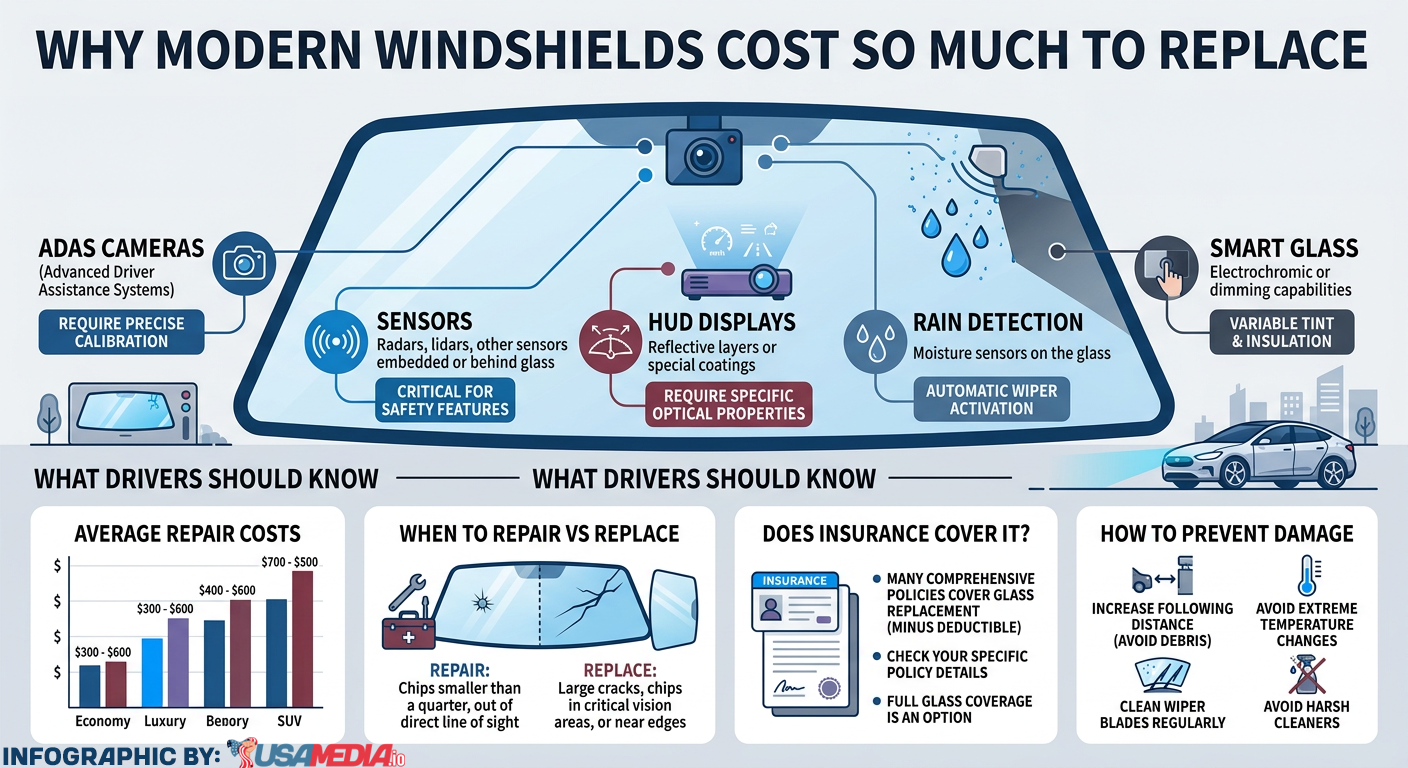
Autonomous vehicles rely heavily on an advanced network of cameras, LiDAR, radar, and other sensors integrated with or mounted behind the windshield. This glass is no longer just a protective barrier but a complex technological system essential for the vehicle’s perception and decision-making.
These sensor arrays include:
- Multiple forward-facing cameras (5 to 10+ depending on the manufacturer)
- LiDAR units creating detailed 3D environmental maps
- Radar systems measuring velocity and object trajectories
- Thermal imaging for visibility in adverse weather
- AI processing units analyzing data with latencies under 100 milliseconds
The windshield’s optical clarity, precision alignment, and structural integrity are paramount. Even minor chips, cracks, or coating imperfections can degrade AI perception by 2–5%, causing misidentification of pedestrians, road signs, or obstacles, which may lead to unsafe behavior or system shutdowns.
Innovative Windshield Technologies
Modern autonomous windshields integrate several cutting-edge features designed to optimize sensor performance and durability:
- Electrochromic Glass: Automatically adjusts tint to reduce glare and enhance camera vision.
- Hydrophobic Coatings: Accelerate water runoff improving camera clarity in rain.
- Anti-Reflective Layers: Minimize light reflection to prevent sensor confusion.
- Self-Healing Polymers: Repair micro-fractures that would otherwise degrade sensor performance.
- Embedded Displays: Provide on-glass diagnostics and fleet management data integration.
These advancements significantly increase replacement costs, with smart windshields priced between $800 and $2,500, compared to $300–$600 for traditional glass—a crucial consideration for fleet managers.
Looking for affordable front windshield replacement, gorilla glass windshield replacement or ADAS recalibration? Quality Glass Service, LLC. is your trusted mobile auto glass repair service. Call or text: 602-349-7267 or fill out our online form to get a free estimate.
Operational Impact: Why Windshield Integrity Matters for Autonomous Fleets
Uptime Is Everything
For commercial fleet operators, downtime represents lost revenue and productivity. Autonomous vehicles are highly dependent on windshield functionality—any damage that impairs sensors or triggers ADAS recalibration can immediately render a vehicle unusable.
Windshield failures in fleets such as Waymo’s autonomous taxis or Uber’s pilot vehicles create cascading operational challenges:
- Repair vs. Replacement: Small chips outside sensor zones may be repaired, but cracks or damage within sensor areas mandate full windshield replacement with precise ADAS calibration.
- Calibration Necessity: Post-replacement, in-vehicle ADAS calibration, costing between $300 and $800, ensures sensors provide accurate data critical for safe autonomy.
- Downtime Costs: Beyond repair costs, every hour offline affects revenue—making prompt, mobile windshield services indispensable.
Economics of Windshield Maintenance in Autonomous Fleets
Windshield repair and replacement costs for EV fleets are notably higher due to sensor integration:
| Service Type | Estimated Cost per Vehicle |
|---|---|
| Small Chip Repair | $50 – $150 |
| Standard EV Windshield Replacement | $400 – $900 |
| Autonomous Vehicle Replacement + Calibration | $1,200 – $2,500+ |
For example, a fleet of 100 vehicles may face $40,000 to $100,000 annually in windshield-related costs when factoring in repairs, replacements, recalibration, and downtime. Insurance premiums and deductibles also reflect the higher stakes, with autonomous vehicles often carrying deductibles starting at $500–$1,000 versus $0–$250 for traditional vehicles.
Proactive Fleet Maintenance Strategies
Leading AV fleet operators invest in systems to mitigate windshield failures:
- Monthly inspections including thermal imaging to detect hidden stress points.
- Automated sensors alerting fleets to micro-damage.
- Preventative windshield replacements every 50,000–75,000 miles regardless of visible defects.
- Bulk service agreements with windshield specialists ensuring priority scheduling, discounted repairs, and mobile services directly at fleet locations.
Such strategies optimize uptime, reduce costly emergency repairs, and maintain AI safety certification compliance.
How Major Autonomous EV Operators Handle Windshield Challenges
Tesla’s Proprietary Approach
Tesla leads with an integrated camera-only vision system requiring specialized windshields with embedded sensors and displays. Tesla vehicles demand unique repair protocols to maintain Full Self-Driving (FSD) functionality. Although Tesla manages most replacements through its service centers, this vertical integration can create bottlenecks for fleet operators needing rapid turnaround, placing commercial third-party repair providers like Quality Glass Service at a strategic advantage.
Waymo’s Redundant Sensor Network
Waymo employs multiple windshield cameras with overlapping fields of view for redundancy. Their sophisticated AI continuously monitors sensor health and preemptively replaces windshields to avoid unplanned downtime. Operating primarily in key US tech hubs like Phoenix and San Francisco, Waymo’s fleet benefits from streamlined maintenance logistics and strong partnerships with local windshield service providers.
Uber and Lyft’s Fleet Management Model
Uber and Lyft, while focusing on software and operations, manage autonomous pilot vehicles requiring standardized windshield specifications and fast-response repair networks. Their reliance on insurance coordination further underscores the importance of specialized providers who understand autonomous EV requirements.
Regulatory and Infrastructure Considerations in Autonomous EV Windshield Maintenance
Emerging Guidelines and Standards
Regulators are catching up with technology demands. The Federal Highway Administration (FHWA) is developing sensor-integrated windshield standards, and organizations like SAE have updated their J3016 guidelines to include optical clarity and calibration requirements. States like Arizona, California, and New York are pioneering autonomous vehicle glass regulations, often mandating certified service providers and routine inspections.
Arizona: A Hub for Autonomous Vehicle Testing and Maintenance
Arizona’s permissive testing environment, particularly around Mesa and Phoenix, has fostered a robust ecosystem for autonomous fleet operations. This has created unique opportunities for companies specializing in autonomous windshield repair, calibration, and mobile service like Quality Glass Service, carving out a competitive advantage in the Valley’s transportation infrastructure.
Taking Action: What to Do if You Have Windshield Damage
If you notice chips or cracks, follow these steps:
- Assess the damage’s size and location.
- Review your insurance coverage and deductible.
- Contact Quality Glass Service for a free, no-obligation quote.
- Schedule an appointment at a convenient time.
- Drive confidently knowing your safety systems are calibrated and fully operational.
For ongoing care, consider scheduling regular windshield inspections and ask about protective glass coatings to extend your windshield’s lifespan.
Recognizing the Value of Modern Windshields
Modern windshields do far more than serve as simple glass barriers—they are integral safety components equipped with advanced technology. The increased cost reflects these technological advances, as well as the professional expertise required for precise calibration and installation.
At Quality Glass Service in Mesa, Arizona, we’re dedicated to providing transparent information, high-quality OEM auto glass, expert ADAS calibration, and seamless insurance handling. Contact us today to get a free quote and experience peace of mind with a properly installed and calibrated windshield that keeps you safe on every journey.
Looking for affordable front windshield replacement, gorilla glass windshield replacement or ADAS recalibration? Quality Glass Service, LLC. is your trusted mobile auto glass repair service. Call or text: 602-349-7267 or fill out our online form to get a free estimate.