

Breadcrumbs
These links will help you get back to where you want to go faster.
How to Keep Your Tesla and EV Cool in Arizona’s Intense Summer Heat
The Ultimate Guide for Mesa Drivers
Arizona’s blistering summer heat presents unique challenges for electric vehicle (EV) owners, especially those driving Teslas in Mesa and the surrounding areas. With temperatures frequently soaring well above 110°F—and often peaking near 120°F or higher—EVs face thermal stresses that directly impact battery efficiency, charging speed, and interior comfort. While gas-powered vehicles rely partly on engine heat management, EVs draw critical power from their batteries to keep their cabins cool, creating a delicate balance between passenger comfort and maintaining driving range.
This comprehensive guide dives into the science of how desert heat affects EVs differently, the real impact on battery life and charging performance, and the most effective strategies Mesa drivers can adopt to protect their vehicles. From cutting-edge ceramic window tinting to smart preconditioning habits, this article equips you with everything you need to keep your EV cool, efficient, and safe through even the harshest Arizona summers.
Looking for affordable front windshield replacement, gorilla glass windshield replacement or ADAS recalibration? Quality Glass Service, LLC. is your trusted mobile auto glass repair service. Call or text: 602-349-7267 or fill out our online form to get a free estimate.
What you will learn in this article
– Arizona’s extreme summer heat (often exceeding 110°F and reaching 120°F+) poses significant challenges for Tesla and other EV owners in Mesa, impacting battery performance, charging speeds, and interior comfort.
– High temperatures reduce DC fast-charging by 30–50% above 95°F and stop it above 125°F to protect batteries. Increased cooling use can cut driving range by 20–40%. Interior surfaces may reach 170–180°F, risking burns and material damage.
– Professional ceramic window tinting is the most effective glass treatment, reflecting up to 80% of infrared radiation without interfering with electronics, reducing cabin temps by 15–20°F, improving driving range (5–10%), speeding up charging (15–25%), and protecting interiors from UV damage.
– Combining ceramic tinting with reflective windshield sunshades and roof/rear sunshades offers optimal heat protection tailored to specific use cases like outdoor parking or panoramic glass roofs.
– Smart heat management habits include preconditioning the cabin while plugged in to reduce battery strain, scheduling fast charging during cooler hours, and using multiple shading layers on the windshield, roof, and rear windows.
– Heat significantly shortens battery lifespan—every 27°F rise in battery temperature reduces lifespan by 10–15%. Keeping batteries near 70°F maintains capacity much longer than operating at around 95°F. Thermal cycling from rapid heating and cooling damages interior components and electronics, while touchscreen functionality may throttle near 140°F.
– Essential heat-beating accessories include custom-fit Nano Ice Crystal windshield sunshades, magnetic or press-fit roof sunshades for panoramic glass, breathable microfiber steering wheel covers, and high-performance nano-ceramic window films for total heat rejection.
Why Arizona Heat Poses Unique Challenges for EVs
The Science Behind Heat Stress in Electric Vehicles
Unlike traditional gasoline vehicles, electric cars rely heavily on battery chemistry and sophisticated thermal management systems that are highly sensitive to temperature extremes. When parked under direct desert sunlight, cabin temperatures can spike rapidly—rising roughly 20°F in just 10 minutes, reaching dangerously high levels within half an hour. This intense heat not only impacts passenger comfort but triggers automatic protective throttling in battery charging protocols, slowing down fast-charging rates to preserve battery health.
Research from the U.S. Department of Transportation and studies indexed by PubMed illustrate that slightly cracking windows offers negligible relief against Arizona’s blistering heat. Instead, the glass surfaces themselves act like solar collectors, transmitting approximately 76% of sunlight energy as heat into the cabin, creating oven-like conditions. Managing this radiant heat load is critical to maintaining your EV’s range and long-term battery integrity.
Key Effects of Arizona Heat on Your Tesla or EV
- Slower Battery Charging: EV batteries typically achieve optimal charging speeds between 70–80°F. When ambient temperatures rise above 95°F, DC fast-charging rates can drop by 30–50%, and above 125°F, charging may even pause to prevent overheating.
- Increased HVAC Energy Consumption: Since EVs rely solely on battery power for climate control—unlike gas vehicles that benefit from engine heat—the demand for cabin cooling in 110°F+ conditions can reduce driving range by 20–40%.
- Interior Surface Overheating: Steering wheels and dashboards can reach 170–180°F in direct sun, posing burn hazards and accelerating interior material degradation.
- UV and Thermal Damage: Prolonged sun exposure causes premature fading, cracking, and discoloration, threatening your vehicle’s interior aesthetics and resale value.
The Financial and Practical Benefit of Glass Treatment in Mesa’s Climate
Why Professional Ceramic Window Tinting Is the Most Effective Solution
For Mesa EV owners, professional ceramic window tinting combines superior heat rejection with long-lasting protection and exceptional clarity. Unlike traditional dye-based tints that absorb and reradiate heat or metallic tints that disrupt electronics, ceramic tints utilize non-conductive nanoparticles to scatter and reflect up to 80% of infrared radiation. This significantly lowers cabin temperatures without darkening your windows or interfering with essential devices like GPS, 5G, or keycard sensors.
Studies conducted by the National Renewable Energy Laboratory (NREL) demonstrate that high-quality ceramic tinting can reduce cabin temperature by 15–20°F compared to untreated glass. This temperature drop translates to a 5–10% improvement in driving range, 15–25% faster DC charging speeds, and a much longer lifespan for interior materials thanks to effective UV blockage.
Combining Tints and Shades for Maximum Summer Comfort
| Solution | Best For | Advantages | Drawbacks |
|---|---|---|---|
| Professional Ceramic Window Tinting | Long-term owners with outdoor parking | Permanent, invisible, consistently effective, blocks 50–80% heat, 99%+ UV block | Higher upfront cost ($400–$800); requires expert installation; difficult to reverse |
| Reflective Windshield Sunshades | Commuters and frequent errand runners | Affordable ($25–$50), reversible, immediate dash heat relief | Must be installed/removed with each trip; no cooling when driving; limited roof protection |
| Roof/Rear Sunshades | Families and panoramic glass roof EVs | Enhances rear passenger comfort; moderate cost ($35–$50) | Can reduce open-glass feeling; fitment is generation-specific; no front window coverage |
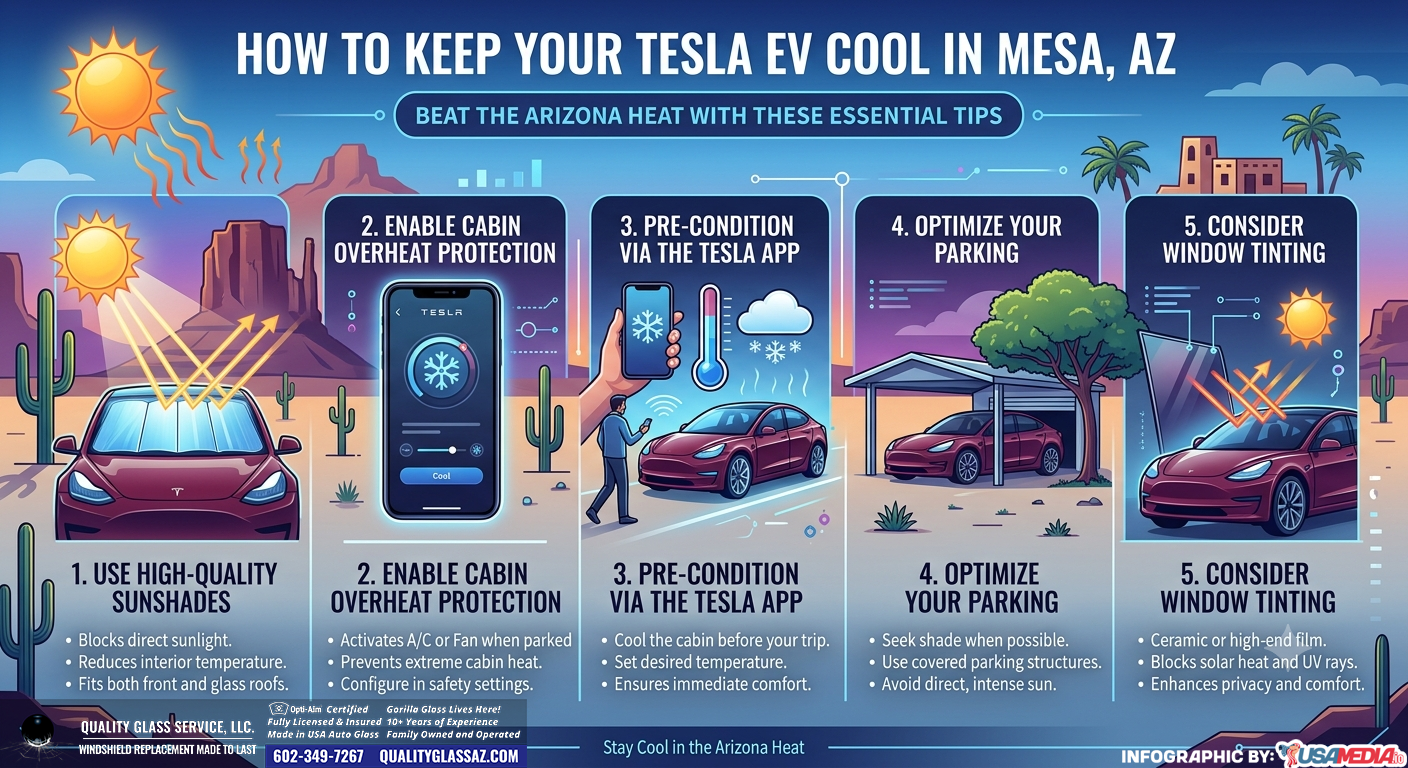
For optimal protection, Mesa EV owners should adopt a combination approach: start with professional ceramic tinting on the front windshield and side windows, add a reflective windshield sunshade during the hottest months, and use roof shades if your EV features panoramic glass roofs and carries rear passengers regularly.
Looking for affordable front windshield replacement, gorilla glass windshield replacement or ADAS recalibration? Quality Glass Service, LLC. is your trusted mobile auto glass repair service. Call or text: 602-349-7267 or fill out our online form to get a free estimate.
Managing Your EV’s Heat Exposure with Smart Habits
Step 1: Scheduled Preconditioning While Plugged In
Taking advantage of your Tesla or EV’s scheduled departure and app-based preconditioning features is the most impactful habit to mitigate summer heat stress. By activating climate control while the vehicle is still plugged into the charger, the HVAC system runs on grid power rather than battery power, eliminating a significant range penalty. This pre-cooling lowers cabin temperatures to a comfortable 72–75°F before you enter the vehicle, preventing the thermal shock that strains both battery and climate systems.
In Mesa’s extreme heat, 10–15 minutes of preconditioning before driving is generally sufficient. Consistently practicing this habit can extend your battery’s functional lifespan by 1 to 3 years by reducing thermal cycling stress.
Step 2: Effective Shade Management
Implement a tiered approach to shading your EV’s glass surfaces to maximize heat rejection. Protect the windshield first to safeguard critical control surfaces like the steering wheel and dashboard. Next, install a roof shade if possible, especially for panoramic glass models, to reduce radiant heat inside the cabin. Finally, tint or shade rear windows if you regularly transport passengers to ensure their comfort and help maintain interior condition.
Step 3: Optimized Charging Practices
Schedule fast-charging sessions during cooler periods—early mornings (6–9 AM) or evenings (7–10 PM)—to capitalize on naturally lower ambient temperatures. Shading your vehicle during charging, spacing fast charges at least two hours apart, and allowing your EV to idle briefly in shade before plugging in helps reduce thermal stress, boosting charging efficiency by up to 50% in peak heat conditions.
Understanding Heat’s Impact on Battery Performance and Vehicle Longevity
How Heat Slows Charging and Degrades Batteries
Charging speed is highly temperature-dependent: DC fast-charging operates optimally between 25°F and 50°F ambient temperatures. Beyond 95°F, charging rates decline sharply—dropping to 70–85% efficiency between 95–110°F, and plunging to 30–40% or less past 125°F. Under extreme heat, battery management systems may temporarily halt charging to cool the pack.
University of Michigan Energy Institute research quantifies heat’s impact on battery longevity. For every 27°F (15°C) rise in average battery temperature, lifespan decreases roughly 10–15%. Keeping your battery around 70°F can preserve 95% capacity over eight years, whereas consistently operating near 95°F cuts this to 75–80%. Given Mesa’s persistent summer heat—often sustaining ambient temperatures between 105–115°F for months—effective cooling is essential.
The Invisible Threat: Thermal Cycling and Interior Damage
Thermal cycles from rapid heating and cooling cause stress fractures in glass and accelerate wear on interior components. Steering wheels and dashboards exposed to direct sunlight can reach temperatures as high as 170–180°F. The heat not only jeopardizes electronics—triggering touchscreen throttling near 140°F—but also burns skin and leads to premature cracking and discoloration of interior materials within 1–2 years.
Must-Have Accessories for Beating Mesa’s Desert Heat
Custom-Fit Windshield Sunshades
Generic sunshades often fail to fully protect Tesla interiors due to critical gaps around forward-facing cameras and sensors. Investing in high-quality, generation-specific Nano Ice Crystal shades that incorporate precise cutouts dramatically improves heat reflection, lowering cabin temperatures by up to 40°F during long parking sessions.
Panoramic Roof Sunshades
Even Tesla’s factory panoramic glass tints absorb and radiate substantial heat, elevating headliner surface temperatures to over 125°F. Magnetic or press-fit roof sunshades create an insulating air pocket, effectively shielding passengers from downward radiant heat and reducing air conditioning load by 25–35°F.
Breathable Microfiber Steering Wheel Covers
After parking in intense sun, bare steering wheels can be painfully hot. Unlike leather covers that trap heat, breathable microfiber covers stay 20–30°F cooler, providing comfortable and safer grip immediately upon entering the car.
High-Performance Ceramic Window Films
Applying nano-ceramic films to side and rear windows completes the protective barrier, dramatically reducing overall solar heat gain and enhancing cabin comfort while boosting range and battery performance.
Avoid Common Mistakes Mesa EV Owners Make
- Cracking Windows Does Not Help: Slightly opened windows raise cabin temperatures just as quickly as closed ones in intense heat—practical heat relief comes from blocking or reflecting sunlight instead.
- Using Universal Shades Across Generations Fails: New Tesla models differ in glass curves and sensor placements; using the wrong shade results in poor coverage, sagging, and frustration.
- Evaluating Roof Shades Without Proper Preconditioning: Always cool the cabin first using the car’s A/C while plugged in before testing shade effectiveness—hot cabin temps may indicate insufficient preconditioning, not shade failure.
- Focusing Only on UV Blockage: UV protection does not equal total heat rejection; infrared radiation is the primary heat source blocked effectively by ceramic tints.
- Ignoring Windshield Protection: If steering wheel and dashboard remain hot, investing in windshield sun protection is crucial—roof shades alone won’t resolve front cabin heat.
Choosing the Right Glass Service Provider in Mesa
Quality Glass Service, LLC stands as Mesa’s trusted expert in professional, generation-specific ceramic window tinting and auto glass care for Teslas and other EVs. They provide tailored solutions—including Arizona-compliant tinting that maintains visibility, premium film brands such as XPEL, 3M, and LLUMAR, and lifetime warranties to ensure lasting performance.
Beyond tinting, their specialized windshield replacement and Advanced Driver Assistance Systems (ADAS) camera calibration services ensure your vehicle’s safety features remain fully operational post-repair. With convenient mobile service options and zero-deductible windshield repair coverage under Arizona law, Quality Glass Service, LLC streamlines the maintenance experience for Mesa EV owners.
Mastering Mesa’s Summer Heat for Optimal EV Performance
Surviving and thriving in Arizona’s intense summer heat requires understanding the unique thermal challenges EVs face and adopting proven strategies to manage them effectively. Professional ceramic window tinting combined with custom-fitted sunshades and disciplined preconditioning routines provides the best defense against battery degradation, charging slowdowns, and interior damage.
Smart parking choices, strategic charging times, and investing in quality glass treatments will not only protect your Tesla or EV today but extend its efficiency and lifespan for years. With the expert guidance and services available locally, Mesa drivers can confidently conquer the desert heat and enjoy their electric vehicles comfortably and sustainably through every harsh Arizona summer.